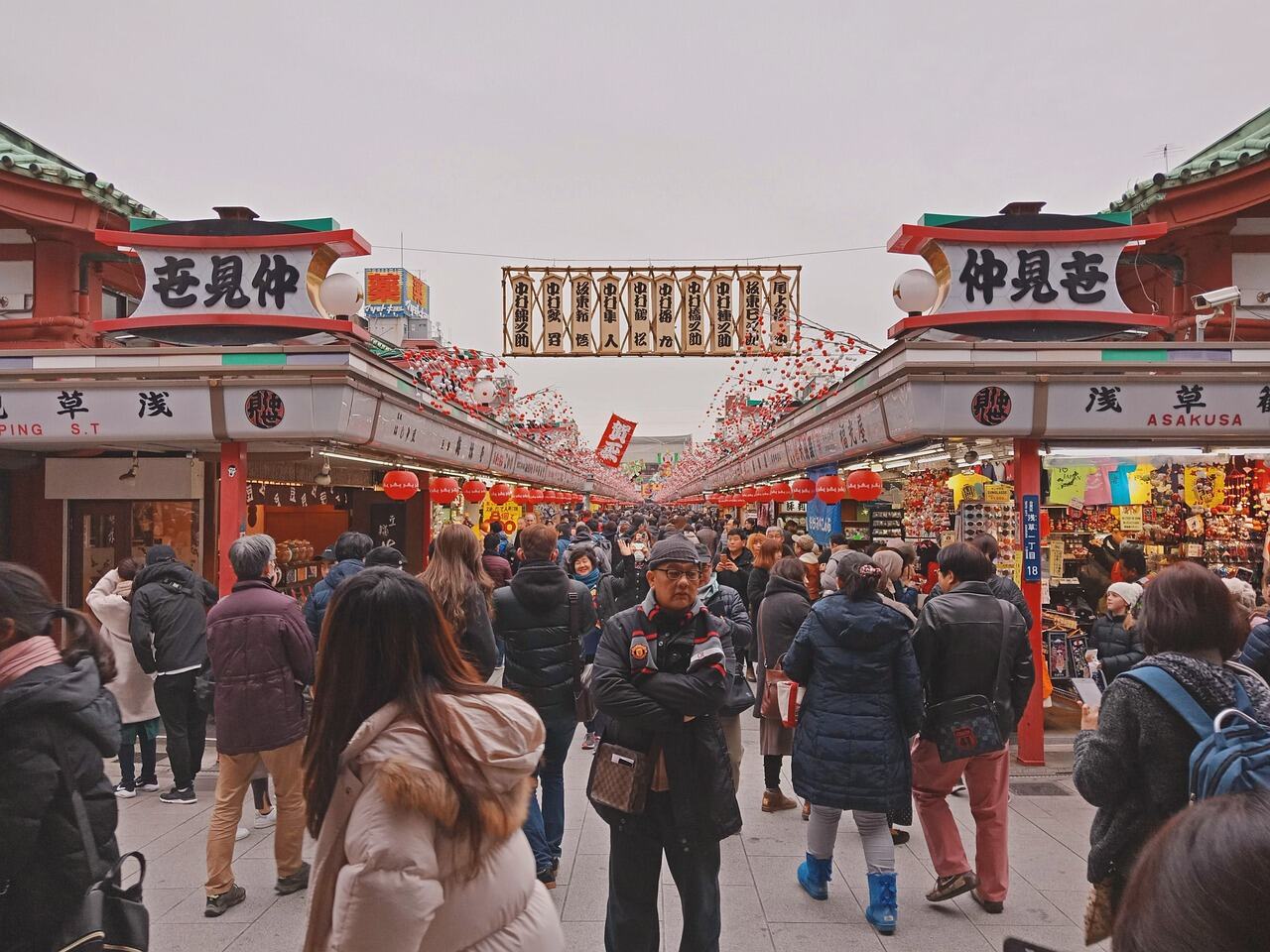
Senso-ji Temple
Tokyo, Japan · Landmark
About Senso-ji Temple
Senso-ji is Tokyo's oldest and most significant Buddhist temple, originally founded in the 7th century. Dedicated to Kannon, the goddess of mercy, it stands as a vibrant symbol of traditional culture amidst modern Tokyo. Millions of visitors flock here each year to marvel at its grand gates, bustling market street, and peaceful spiritual grounds.
Don't miss
- Marvel at the colossal red lantern hanging beneath the iconic Kaminarimon Gate.
- Browse traditional street food and handcrafted souvenirs along bustling Nakamise-dori.
- Admire the majestic five-story pagoda rising beside the main temple complex.
- Step inside the main hall to witness daily prayer rituals and intricate golden altars.
Plan your visit
Visit early in the morning before 9:00 AM to beat the crowds, or visit after sunset to see the illuminated temple grounds. Autumn and spring provide the most comfortable weather for exploring the open-air complex.
Admission to the Senso-ji temple grounds and main hall is completely free, with no reservations required. Small cash donations are customary if you wish to burn incense or draw a fortune slip.
Take the Tokyo Metro Ginza Line, Toei Asakusa Line, or Tobu Skytree Line directly to Asakusa Station. From there, it is an easy five-minute walk to Kaminarimon Gate.
Tips for visiting
- Cleanse your hands and mouth at the dragon-shaped purification fountain before entering the main hall.
- Wave the smoke from the large central incense burner over your body for good health and blessings.
- Draw an omikuji fortune slip for a nominal coin donation, and tie it to the wire rack if you receive bad luck.
- Eat street snacks next to the stall where you buy them, as walking while eating is discouraged on Nakamise-dori.
- Return after dark when the lanterns and pagoda are lit up for spectacular crowd-free photography.
Senso-ji Temple FAQ
Is photography allowed inside Senso-ji?
Photography is permitted throughout the outdoor temple grounds, courtyard, and shopping street. However, taking photos inside the inner sanctuary of the main hall is strictly prohibited to respect worshippers. Always look for signage indicating photography rules.
What should I do if I draw a bad fortune slip?
If your omikuji slip reveals bad luck, do not keep it or bring it home. Simply fold the paper and tie it to the designated metal racks nearby so the bad luck remains at the temple. If you receive good luck, you should keep the slip with you.
Are the temple grounds open 24 hours?
Yes, the outdoor grounds and outer gates of Senso-ji remain open to the public around the clock. The main hall itself closes in the late afternoon, and shopping stalls generally operate from mid-morning to early evening. Visiting late at night offers a serene atmosphere with illuminated buildings.
Is Senso-ji accessible for wheelchair users?
Yes, the pathways leading through the gates and along the temple complex are paved and flat. The main hall is equipped with an elevator to provide access without using the steep steps. Midday crowds can be dense, so morning visits are recommended for smoother navigation.
More things to do in Tokyo
Shibuya Crossing Landmark
Immerse yourself in the bustling heart of modern Tokyo at the world's busiest pedestrian intersection.
teamLab Planets Museum
Wander barefoot through massive, fully immersive digital art installations featuring water and light.
Meiji Jingu Shrine Landmark
Find tranquility beneath towering evergreen trees at this expansive Shinto shrine dedicated to Emperor Meiji.
Akihabara Electric Town Neighborhood
Browse multi-story electronics stores, retro game centers, and anime collectibles in the otaku capital.
Tsukiji Outer Market Food
Sample freshly prepared seafood, tamagoyaki, and Japanese street snacks from historic alleyway stalls.
Shinjuku Gyoen National Garden Nature
Stroll through a serene blend of traditional Japanese, English landscape, and French formal gardens.
Tokyo Skytree Landmark
Take in sweeping 360-degree views across the metropolis and Mount Fuji from Japan's tallest tower.
AI-written guide, last updated 2026-10-09. Check opening times and ticket prices on the official website before you go. Photos: KianHao, ChiemSeherin on Pixabay.