Bayon Temple
Siem Reap, Cambodia · Landmark
About Bayon Temple
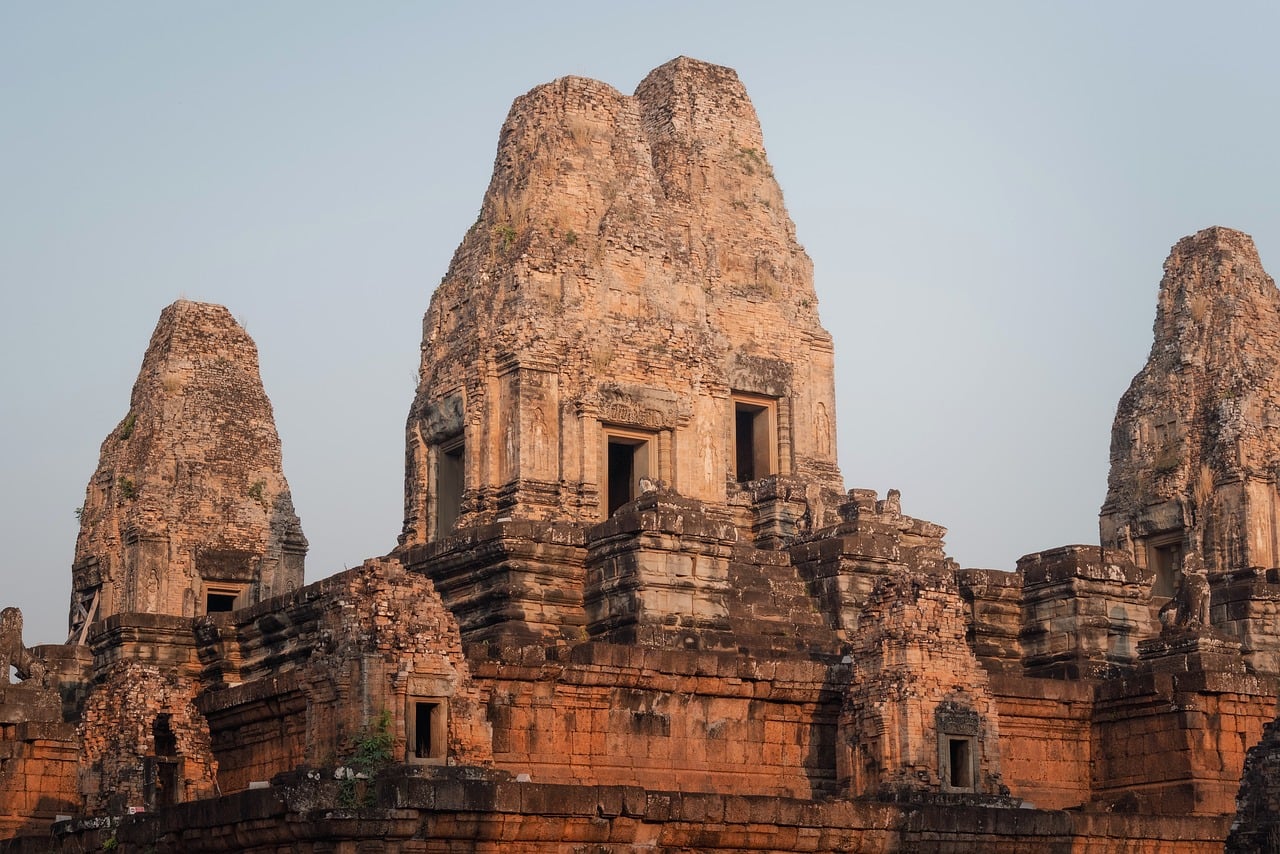
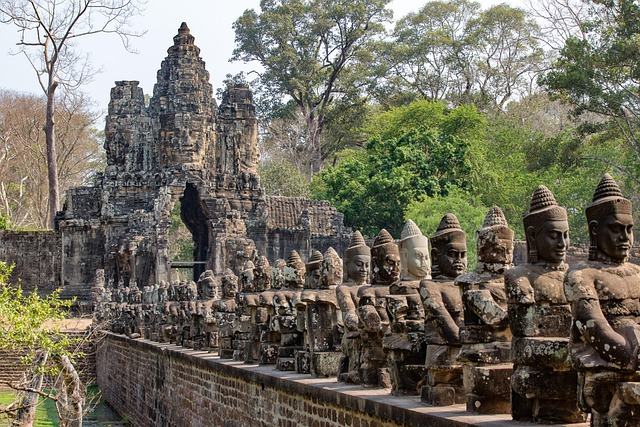
Bayon Temple is the captivating centerpiece of the ancient royal city of Angkor Thom in Cambodia. Constructed in the late 12th century by King Jayavarman VII, it is globally celebrated for its dozens of towers adorned with over two hundred serene, smiling stone faces. As one of the most distinctive monuments in Angkor, it represents an extraordinary synthesis of Mahayana Buddhist architecture and Khmer royal power.
Don't miss
- Marvel at the enigmatic smiling stone faces carved across the towering sanctuary spires.
- Examine the detailed outer bas-reliefs depicting vibrant scenes of everyday 12th-century Khmer village life and street markets.
- Study the inner gallery carvings illustrating epic historical naval and land battles between the Khmer and Cham armies.
- Climb up toward the upper terrace to stand face-to-face with the massive carved towers in the morning light.
Plan your visit
Early morning right after sunrise or late afternoon provides the best photographic lighting and fewer crowds. The dry season from November to March offers the most comfortable weather for exploring.
Access requires the official Angkor Pass, which must be purchased online or at the official Angkor ticket center prior to arrival. Individual site tickets are not sold separately.
Located roughly 10 kilometers north of downtown Siem Reap, Bayon sits directly in the center of the walled city of Angkor Thom. Most travelers reach it by hiring a remork (tuk-tuk), renting an e-bike, or taking a private car tour.
Tips for visiting
- Adhere to the strict dress code by ensuring your shoulders and knees are covered at all times.
- Wear sturdy walking shoes with good grip to navigate the uneven stone flooring and steep stairs.
- Bring a wide-brimmed hat and plenty of water, as the upper terrace has minimal shade.
- Hire an official guide at the site to decipher the complex stories told along the extensive bas-relief walls.
- Avoid touching or leaning against the fragile sandstone carvings to support conservation efforts.
Bayon Temple FAQ
Who do the smiling faces on the towers represent?
Historians generally agree that the faces represent Avalokiteshvara, the bodhisattva of compassion, combined with the idealized likeness of King Jayavarman VII. The serene expressions were meant to convey divine benevolence extending across the Khmer Empire. This striking feature makes Bayon unlike any other temple within the Angkor complex.
Is Bayon included in the standard Angkor Wat tour circuit?
Yes, Bayon is typically the second major stop on the popular Small Circuit tour after watching the sunrise at Angkor Wat. Because of this, it can become quite busy by mid-morning. Visiting during the lunch lull or late afternoon is a great strategy to dodge peak tour groups.
Is Bayon Temple wheelchair accessible?
Unfortunately, Bayon is not accessible for wheelchair users due to high stone thresholds, rubble, and narrow staircases. Visitors with limited mobility can view the impressive exterior and parts of the outer wall carvings from the flat dirt perimeter. Ascending to the upper terrace requires negotiating steep and uneven stone steps.
How does Bayon differ from Angkor Wat?
Angkor Wat is a Hindu monument designed with vast open courtyards and classical symmetrical lines, whereas Bayon is a Mahayana Buddhist temple known for its compact, maze-like layout and face-towers. Additionally, Bayon's outer bas-reliefs uniquely depict the domestic lives of ordinary fishermen, cooks, and traders rather than purely mythological narratives. This offers travelers an intimate window into ordinary ancient Khmer society.
More things to do in Siem Reap
Angkor Wat Landmark
Witness sunrise over the grandest religious monument in the world and admire its intricate sandstone bas-reliefs.
Ta Prohm Landmark
Walk through the atmospheric temple famously intertwined with massive silk-cotton tree roots and jungle foliage.
Banteay Srei Landmark
Marvel at a 10th-century Hindu temple celebrated for its delicate, reddish-pink sandstone carvings.
Phare, The Cambodian Circus Activity
Watch a dynamic performance combining traditional theater, modern circus arts, and social commentary by talented youth.
Angkor National Museum Museum
Learn the deep spiritual and historical context of the Khmer Empire through extensive artifact galleries.
Tonle Sap Floating Villages Nature
Take a boat excursion to stilted and floating communities like Kompong Phluk to observe daily life on Southeast Asia's largest lake.
Pub Street & Night Markets Nightlife
Soak in the buzzing evening energy with street food stalls, foot massages, and lively open-air bars.
AI-written guide, last updated 2026-10-09. Check opening times and ticket prices on the official website before you go. Photos: ahmetyuksek, dMz on Pixabay.