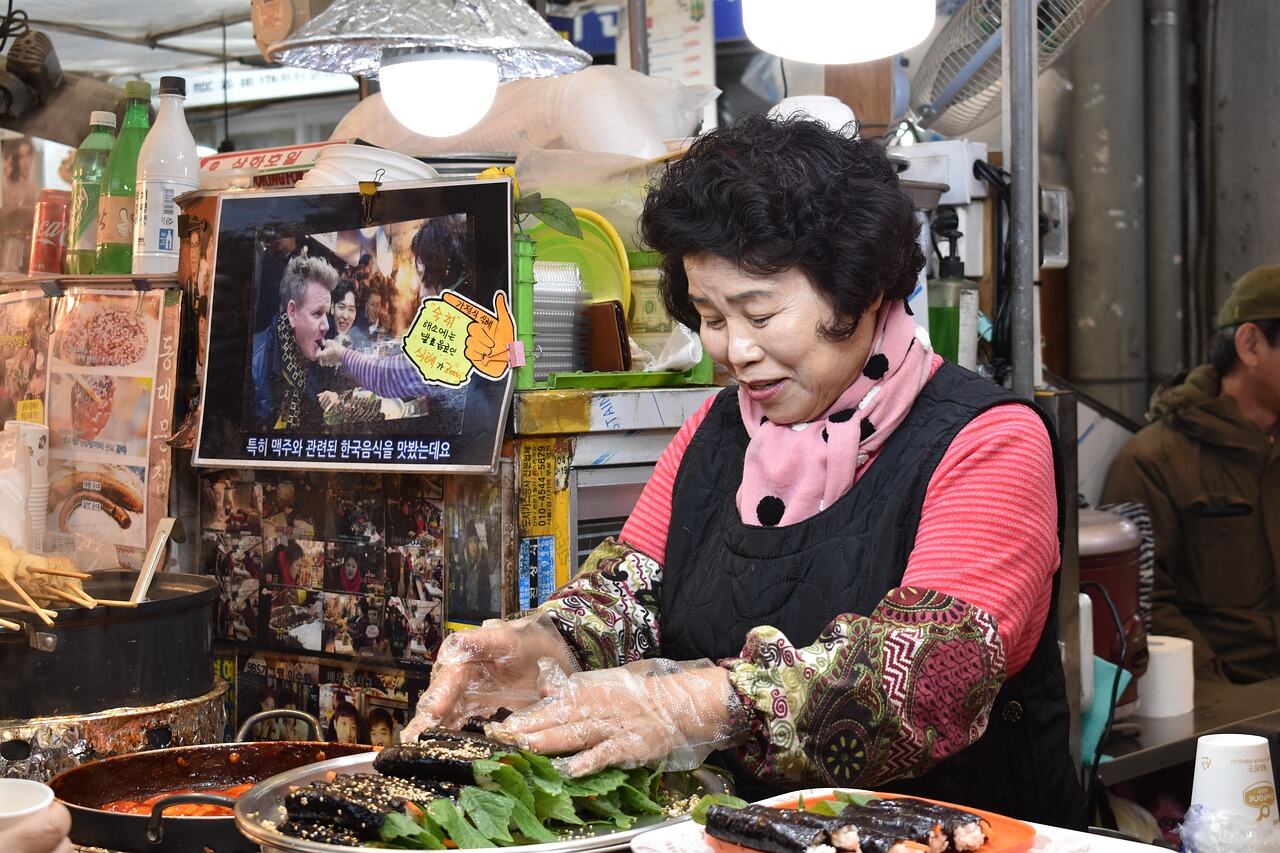
Gwangjang Market
Seoul, South Korea · Food
About Gwangjang Market
Gwangjang Market is one of South Korea's oldest and largest continuously operating traditional markets, dating back to 1905. It is celebrated worldwide for its bustling atmosphere and concentrated alleyways of authentic, freshly prepared street food. Visitors flock here to taste classic Korean comfort dishes and soak up the lively community spirit under illuminated market canopies.
Don't miss
- Crispy bindaetteok, or mung bean pancakes, freshly ground on stone mills and pan-fried until golden.
- Steaming bowls of kalguksu, knife-cut noodles served in rich broth with handmade dumplings.
- Addictive mayak gimbap, mini seaweed rice rolls served with a tangy mustard dipping sauce.
- Tender yukhoe, seasoned raw beef tartare garnished with sliced Korean pear in the specialized beef alley.
Plan your visit
Visit in the late afternoon or early evening around 5:00 PM to catch the peak dinner energy without midnight crowds. Weekday visits are noticeably less chaotic than Saturday nights.
Admission to the market is entirely free, and no tickets or advance reservations are required. You only pay directly for the food, drinks, and souvenirs you purchase at each stall.
Take Seoul Subway Line 1 to Jongno 5-ga Station and exit via Exit 7 or 8, which places you right at the market entrance. You can also take Subway Line 2 or 5 to Euljiro 4-ga Station and walk about five minutes north.
Tips for visiting
- Bring Korean won in cash, as many small street stalls do not accept international credit cards.
- Pace your appetite and share small portions with companions so you can sample dishes from multiple stalls.
- Be prepared to squeeze onto shared bench seating right next to locals and other travelers.
- Explore the second-floor arcades to discover traditional hanbok textiles, home goods, and vintage clothing.
- Look for vendors with steady lines of local elders, as they usually serve the most time-tested recipes.
Gwangjang Market FAQ
Are vegetarian options easy to find at Gwangjang Market?
Yes, mung bean pancakes (bindaetteok) and classic vegetable gimbap are popular meat-free options. However, confirm with vendors before ordering, as some side dishes or noodle broths contain fish stock or anchovies.
When do the food stalls usually open and close?
Most food stalls begin opening mid-morning and operate until late into the evening, often around 10:00 PM or 11:00 PM. General retail shops on the upper floors close earlier in the evening and are typically shut on Sundays.
Can I visit the market if it is raining?
Yes, the entire main market and food street network is sheltered underneath covered arcade roofs. It remains fully operational, warm, and lively regardless of rain or snow outside.
How do I order if I do not speak Korean?
Ordering is very straightforward because most stalls display pre-cooked dishes directly in front of diners. You can easily order by pointing, using basic hand gestures, or referring to pictorial menus.
More things to do in Seoul
Gyeongbokgung Palace Landmark
Wander through the grandest Joseon Dynasty royal palace and watch the royal guard changing ceremony.
Bukchon Hanok Village Neighborhood
Explore quiet hillside alleys filled with preserved traditional Korean wooden houses.
N Seoul Tower Landmark
Ride the cable car to Namsan mountain for sweeping 360-degree skyline views across the metropolis.
Dongdaemun Design Plaza Landmark
Marvel at Zaha Hadid's futuristic curving architecture and browse late-night design exhibitions.
Hongdae Youth Street Neighborhood
Soak in youthful energy with indie live music, busking performances, and quirky fashion boutiques.
Cheonggyecheon Stream Nature
Stroll along a peaceful sunken urban waterway that flows right through the center of downtown.
National Museum of Korea Museum
Discover thousands of years of Korean art, archaeology, and history in a massive modern complex.
AI-written guide, last updated 2026-10-09. Check opening times and ticket prices on the official website before you go. Photos: joelmarrinan, rmsep4 on Pixabay.